
When Leaving a Job Requires a Middleman
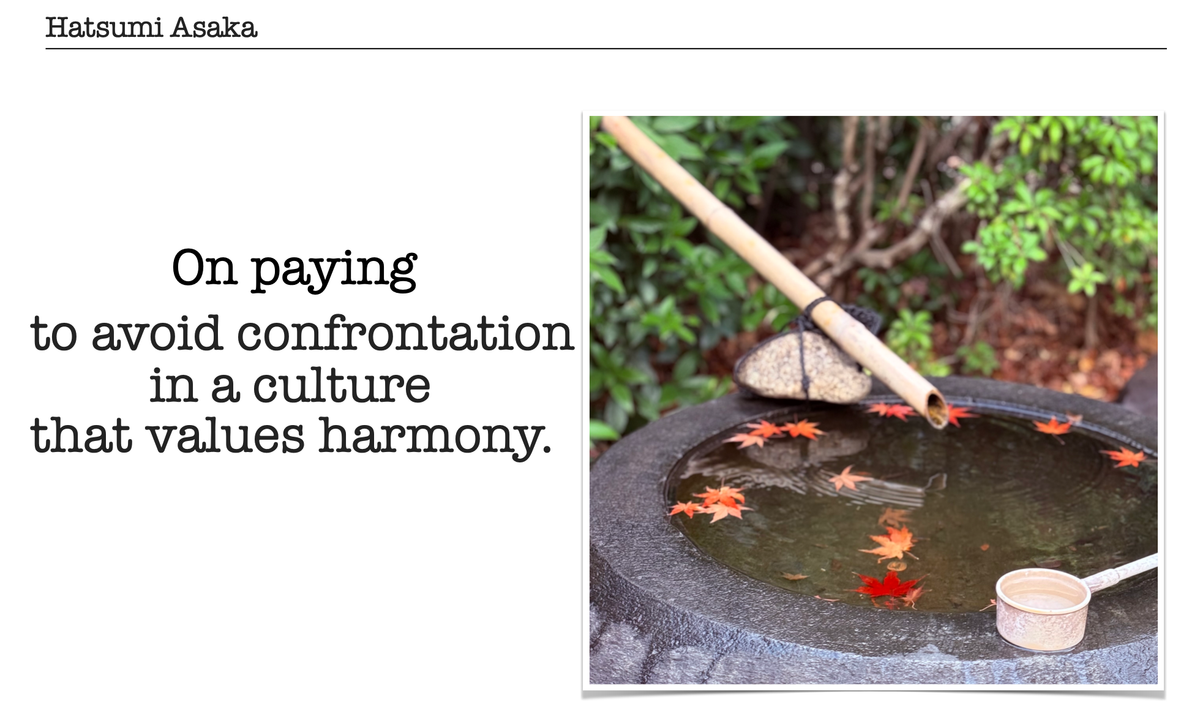
I recently read a news story out of Japan that gave me pause. Two executives of a company operating a “resignation proxy” service — a business that has grown rapidly and drawn attention over the past two to three years — were arrested on suspicion of violating the Attorney Act. Prosecutors allege that the pair received compensation from lawyers in exchange for referring clients to them. In Japan, it is illegal for non-lawyers to broker legal work for attorneys in return for payment.
What caught my attention, however, was not the alleged legal violation. It was the fact that there is demand for such a service at all.
In Japan, there is a long-standing cultural preference for not stating one’s true feelings too directly. All the more so when the matter is awkward or likely to disturb social harmony. Yet even allowing for exceptions, employment is fundamentally a contractual relationship. If resigning from a job feels too uncomfortable to handle face-to-face, one has to wonder whether something in the structure of society — or somewhere else — has become distorted.
According to reports, a full-time employee can hire the service for 22,000 yen (about US$150). The company’s own website claims it handles more than 20,000 requests a year. I found myself weighing the choice. Would I spend that amount to hire a stranger to resign on my behalf, or would I simply tell my employer, “I quit”?
I was born and raised in Japan, and I would like to say I understand where and why Japanese people feel discomfort. Lately, though, that confidence has begun to waver. Has a culture that prizes harmony gradually pushed direct conversation out of reach? As demand for these proxy services grows, is this becoming a new form of harmony?
Japan also has other services designed to help people avoid uncomfortable situations: proxy apologies; representatives who explain personal decisions such as employment changes or divorce to one’s parents; even stand-ins who attend weddings to create the appearance of a full circle of relatives and friends.
It is not hard to imagine that these businesses hope to expand beyond Japan in the near future. Would you welcome their arrival in your country? Or would you feel uneasy about what lies beneath such convenience?